

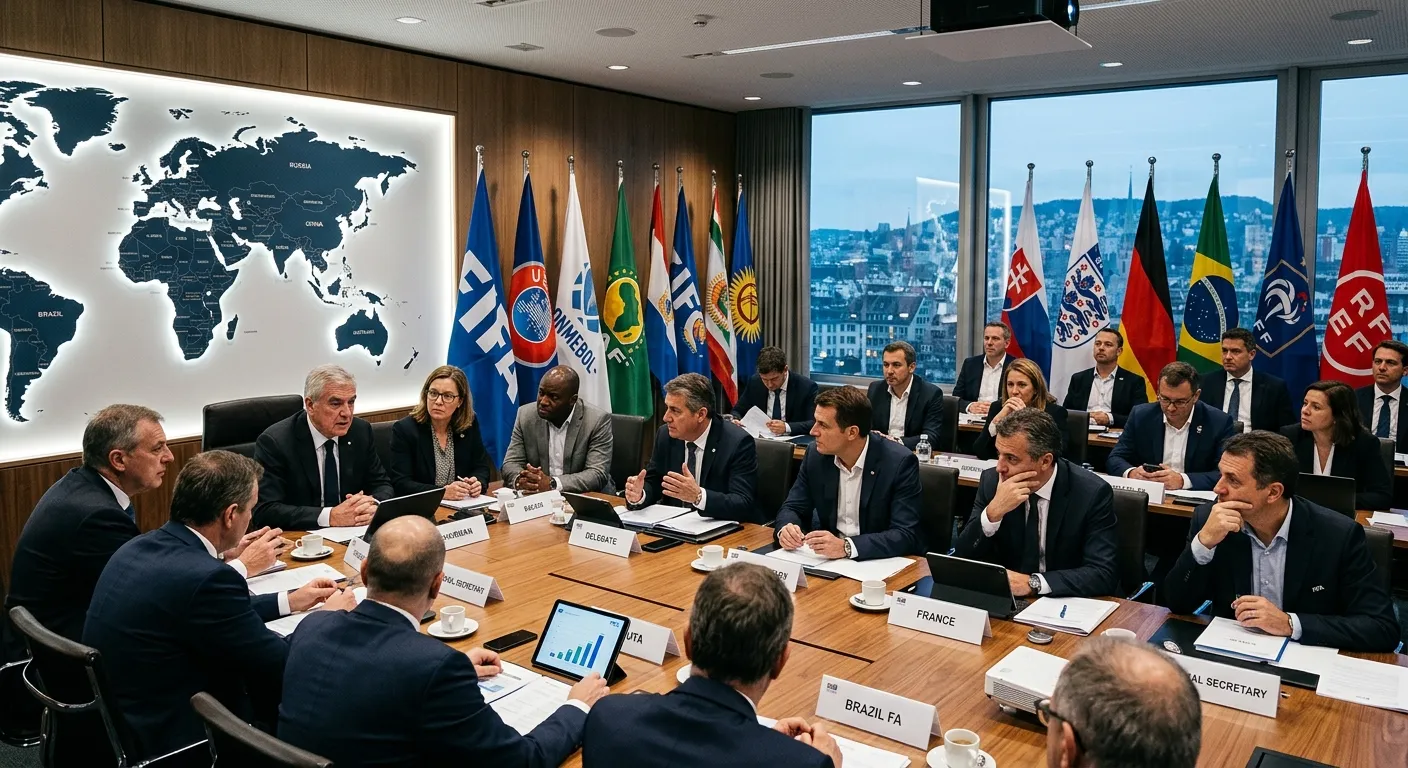
The international football governance landscape is facing a profound political crisis as regional confederations push back against sweeping commercialization proposals. The Confederation of North, Central America and Caribbean Association Football (Concacaf) has officially announced it is joining the Union of European Football Associations (UEFA) in strongly rejecting a controversial initiative led by FIFA president Gianni Infantino. The core of this high-stakes dispute centers around the introduction of FIFA World Cup private investment, a proposal that aims to sell major stakes in flagship international tournaments to private financial entities.
As global stakeholders and sports journalists monitor the escalating power struggle, clubs and national associations have expressed deep anxieties regarding how private equity will alter the structural governance, broadcasting rights, and accessibility of the sport’s most prestigious events. The widening rift highlights mounting tensions between continental bodies who oversee regional competitions and the centralized leadership of global football administration.
- Concacaf joins UEFA in opposing FIFA’s private investment strategy.
- Major concerns focus on potential spikes in ticket prices and broadcasting rights control.
- Disputes highlight a broader governance conflict between continental confederations and FIFA leadership.
UEFA and Concacaf Reject FIFA’s World Cup Plan
The opposition coalition represents a formidable block against the sweeping financial reforms pushed by the current FIFA administration. Under the proposed framework, external financial backers would acquire equity shares tied directly to the commercial performance and tournament assets of the World Cup. For sports business analysts and governance stakeholders, this marks an unprecedented shift in how international sports bodies source capital. Both UEFA and Concacaf argue that opening the tournament to profit-driven entities compromises the traditional, sport-first governance model that has defined international football for decades. In many ways, modern financial structuring in sports mirrors trends seen in Real Estate Investment in Tourist Cities, where high-yield asset monetization frequently conflicts with public access and community interests.
Concerns Over Private Equity in Football
The resistance is rooted in fear of commercial overreach. Private investment funds typically demand predictable, high-yield returns, which critics argue could force sweeping changes to tournament formats, calendar congestion, and commercial rights distribution. Clubs and member associations worry that external financial stakeholders will exert undue influence over regulatory decisions, ultimately sidelining sporting merit in favor of maximized commercial revenue streams.
Impact on Broadcasting Rights and Ticket Prices
A primary friction point in the ongoing debate is the direct consequence this commercial restructuring will have on everyday fans and media partners. With private investors demanding robust financial returns, market observers project significant inflationary pressures on broadcasting rights fees. Furthermore, stakeholders fear these costs will trickle down directly to consumers, resulting in significantly higher ticket prices for matches and restricted free-to-air television access.
Long-Term Financial Sustainability and Global Development
Beyond immediate ticket pricing and broadcasting concerns, the broader debate touches upon the very definition of financial sustainability in modern athletics. FIFA maintains that traditional funding models are no longer sufficient to support the exponential growth required for grassroots development, especially across emerging football confederations. Critics, however, argue that inviting private equity firms creates an unsustainable reliance on speculative capital. Similar economic debates surround Europe Real Estate: Investment Opportunities and Future Price models, where outside capital influx often destabilizes long-term affordability for local populations. Safeguarding the global game requires a delicate balance between generating necessary revenue and protecting the foundational values that unite millions of fans worldwide.
Growing Tensions Between FIFA Leadership and Confederations
The public split between regional bodies and the central governing body underscores a volatile political climate within international sports administration. While the leadership under Gianni Infantino maintains that external capital is vital for expanding global football development programs, opposing confederations view the strategy as a dangerous monetization of the sport’s crown jewel. As discussions stall and lines are drawn, the future trajectory of international tournament governance hangs in the balance, setting the stage for a protracted battle over the commercial soul of football.