

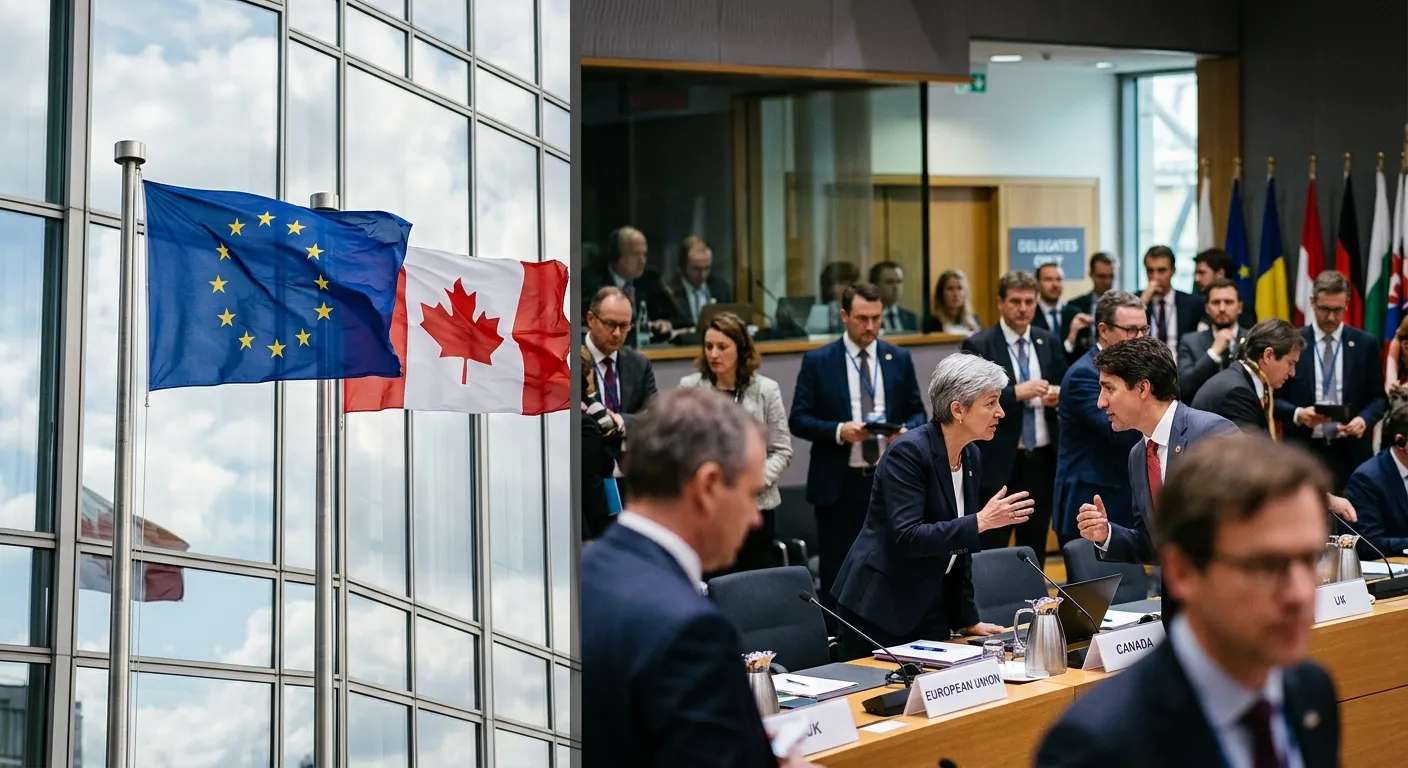
Recent geopolitical dynamics have taken a surprising turn as the European Union extends a strategic proposal to Canada, introducing the concept of EU Canada associate membership. This high-stakes diplomatic move aims to reshape international trade alliances and strengthen economic ties across the Atlantic. However, the initiative has immediately triggered intense reactions, drawing sharp opposition from the United States and raising concerns about potential trade wars, economic retaliation, and shifting global power balances as nations navigate complex foreign policies and regulatory frameworks similar to those seen in EU AI Transparency Rules Take Effect.
- European Commission President Ursula von der Leyen offered Canada associate membership status in the EU.
- The proposal has met with strong US opposition, led by President Donald Trump.
- Washington has warned of potential tariffs and strict political countermeasures against the partnership.
- The development highlights ongoing global efforts to realign international trade alliances.
Introduction to the EU’s Proposal to Canada
The core of this developing diplomatic story centers on a bold overture made by European Commission President Ursula von der Leyen. By offering Canada a formalized status within the bloc, the European Union seeks to foster deeper integration. An associate membership in this context represents a closer alignment in economic, regulatory, and strategic policies, bridging North American and European markets more tightly than ever before and creating a unified front in an increasingly competitive global economy. Observers note that such historic diplomatic alignments often mirror broader economic trends across Western nations, drawing comparisons to shifts seen in European regional development reports like EU Tourism Nights Rise 1.7% in H1 2026, which reflect changing cross-border mobility and economic collaboration.
Details of the Associate Membership Offer
While the exact operational details continue to unfold, the offer of associate membership is designed to grant Canada a unique cooperative standing with the European Union. This framework allows participating non-member nations to engage more deeply in specific economic sectors, easing trade friction and regulatory hurdles. Such agreements often mirror broader European integration strategies, paralleling how the continent manages major technological and economic shifts, much like the funding frameworks observed when EU Releases €3.47 Billion for Ukraine Defense to secure regional stability.
US Opposition and Donald Trump’s Reaction
The diplomatic warmth between Brussels and Ottawa has not been well received in Washington. The US administration quickly voiced profound objections, with President Donald Trump characterizing the proposed partnership as a potentially hostile act against American economic interests. According to comprehensive reporting from The Guardian, American leadership views this closer alignment as an effort to circumvent traditional North American trade structures, prompting immediate friction within Western diplomatic circles.
Potential Tariffs and Political Retaliation
As tensions escalate, the American response is projected to move beyond mere diplomatic criticism. Observers note that the US administration is actively considering concrete economic penalties. Detailed insights published by Associated Press indicate that warnings from Washington include the imminent imposition of new tariffs on Canadian goods and heightened political scrutiny, creating a volatile environment for cross-border commerce.
Economic Ramifications and Future Outlook
Beyond immediate political posturing, economists are closely monitoring the potential fallout of an expanded economic bloc involving European and Canadian entities. Supply chains that have relied on predictable North American trade routes under historic agreements could face abrupt recalibrations. Industry leaders warn that businesses operating internationally may need to swiftly adapt to new regulatory compliance structures and dual-market standards. Furthermore, multilateral initiatives, such as those evaluated under policies like EU Launches €30B AI Gigafactories Initiative, could serve as a blueprint for how technical standards are shared or restricted between allied nations if broader integration moves forward.
Impact on Global Trade Alliances and Diplomacy
The clash over the EU Canada associate membership underscores a broader transformation in international relations. As traditional trade agreements face renegotiation and geopolitical fragmentation accelerates, nations are forced to choose sides or forge new, defensive economic blocs. This unfolding friction demonstrates how deeply interconnected global supply chains are, and how rapidly diplomatic relations can sour when major superpowers perceive strategic threats to their economic dominance.