

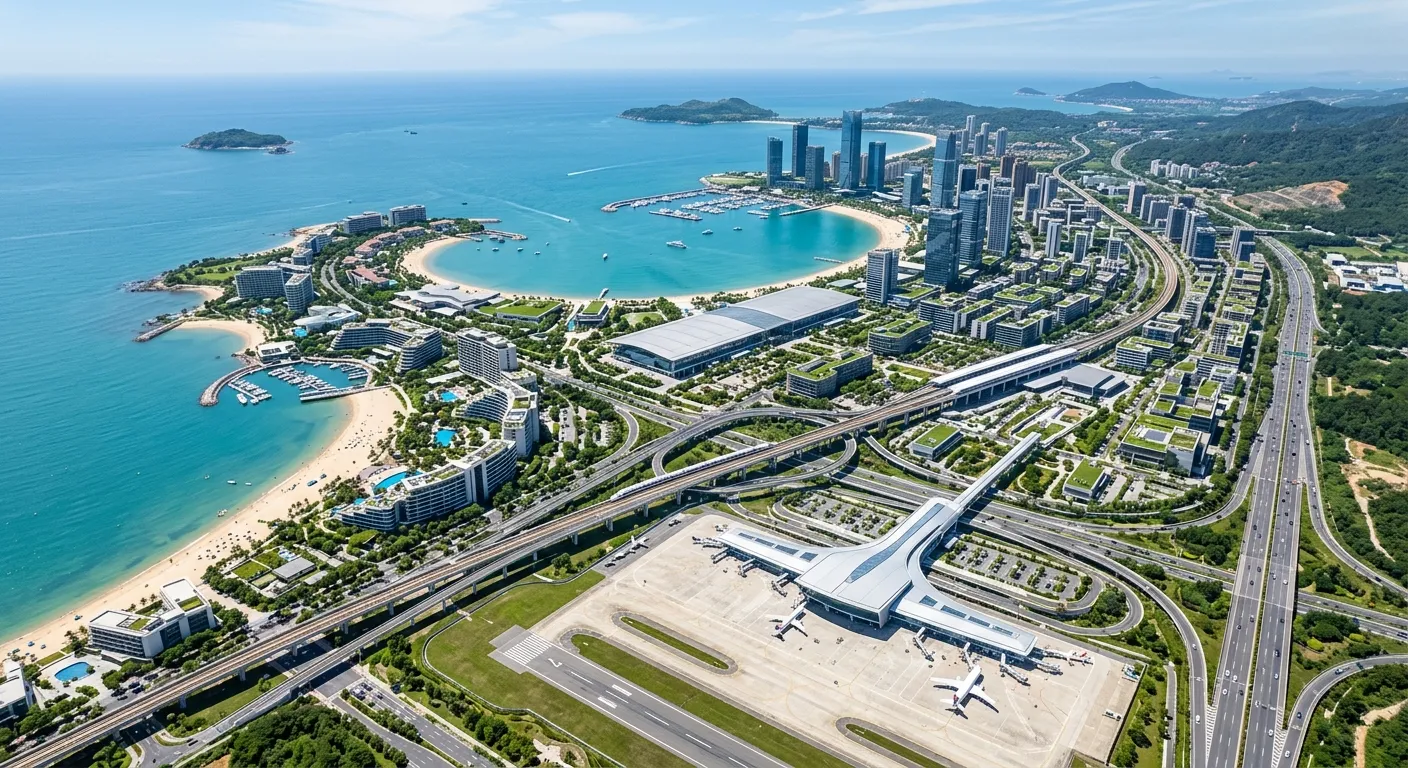
Global tourism investments have officially crossed the monumental $1 trillion threshold, marking a transformative era for the international travel economy. According to the latest figures, this milestone is backed by an impressive 8.5% annual growth rate, highlighting robust confidence from investors, economists, and policymakers worldwide. As the sector rebounds and expands beyond pre-pandemic trajectories, understanding the economic framework of global tourism investment 2025 is crucial for analyzing broader macroeconomic trends and regional developments.
To put this expansion into perspective, industry analysts and travel professionals can also monitor related developments, such as Turkey Tourism Revenue Reaches $25.7B in H1 2026, which reflect parallel surges in Mediterranean travel markets. Furthermore, global economic shifts are creating ripple effects across other major sectors, mirroring trends observed in urban real estate expansions like the JPMorgan Chase Announces $750B Housing Investment initiative.
- Global tourism investments surpassed $1 trillion in 2025 with an 8.5% annual growth rate.
- The travel sector’s Gross Domestic Product (GDP) contribution reached a record-breaking $11.6 trillion.
- Four dominant countries—the United States, China, India, and Saudi Arabia—accounted for nearly half of all capital investments.
- Infrastructure projects and targeted government policies remain the primary catalysts for this capital influx.
Record-Breaking Growth in Global Tourism
What is the economic impact of global tourism in 2025? The sector’s economic impact is defined by its unprecedented contribution to the world economy, generating a record-breaking $11.6 trillion in global Gross Domestic Product (GDP) and outperforming the growth rates of the broader global economy. This stellar performance is heavily linked to rising consumer confidence, the lifting of remaining travel restrictions in key international corridors, and a structural shift toward experiential spending over traditional consumer goods.
WTTC 2025 Report: Key Economic Highlights
The latest World Travel and Tourism Council report details the phenomenal financial metrics defining the current landscape. With overall capital investments soaring past the $1 trillion milestone, the industry is witnessing capital allocation at a scale never seen before. This surge underscores the vital role that travel and tourism play in job creation, commercial real estate, and financial market stability.
GDP Contribution Surpasses Global Growth
The realization of an $11.6 trillion GDP contribution demonstrates that travel and tourism is no longer just a leisure vertical, but a foundational pillar of the global macroeconomic structure. By outpacing the growth rate of the wider economy, the sector has proven its resilience and capacity to drive multi-industry recovery.
Top Countries Driving Tourism Capital Investments
Capital deployment is heavily concentrated in a select group of powerhouse nations. The United States, China, India, and Saudi Arabia together account for approximately half of all global tourism capital investments, injecting nearly $500 billion combined into the ecosystem.
| Metric / Category | 2025 Statistical Data |
|---|---|
| Global Tourism Investments Total | Surpassed $1 Trillion |
| Annual Investment Growth Rate | 8.5% |
| Global Tourism GDP Contribution | $11.6 Trillion |
| Top 4 Countries’ Combined Investment | Approximately $500 Billion (US, China, India, Saudi Arabia) |
The Role of Infrastructure and Government Policies
Strategic government interventions and aggressive infrastructure development have been instrumental in attracting these massive capital flows. Nations like Saudi Arabia and China have channeled substantial public and private funds into mega-projects, transportation hubs, and hospitality networks, setting a new benchmark for national tourism strategies. As these nations expand their aviation capacities, we also see international campaigns gaining momentum, such as Hong Kong Launches Global Tourism Campaign, aiming to capture a larger share of high-value international travelers.
Sustainable Tourism and Future Capital Allocation
A critical driving force behind modern capital deployment is the rigorous integration of environmental, social, and governance (ESG) standards. Investors are increasingly prioritizing eco-friendly resorts, green aviation technologies, and sustainable urban planning to future-proof their portfolios against climate regulations and changing consumer values. This pivot ensures that long-term capital expenditure not only yields high financial returns but also protects the natural and cultural assets that attract travelers in the first place.
Future Outlook for the Travel and Tourism Sector
As we look beyond 2025, the sustained momentum of tourism capital investments indicates a long-term structural shift. Economists anticipate that continued digital transformation, sustainable aviation and infrastructure investments, and evolving traveler behaviors will keep capital expenditure on an upward trajectory. Stakeholders must align their strategies with these capital trends to capture long-term value in a rapidly expanding market.